Back-to-school mornings are busy enough without worrying about a lunch that gets smashed, soggy, or completely ignored by lunchtime. Best school lunches need to be more than nutritious—they need to be easy to pack, easy to eat, filling, and sturdy enough to handle a trip in a backpack.
These 10 high-protein lunch ideas are built with that in mind. You’ll find wraps, pasta salads, snack boxes, quesadillas, chicken bites, and other kid-friendly combinations that hold up well when packed correctly.
Protein foods can include meat, poultry, seafood, eggs, beans, peas, lentils, nuts, seeds, and soy foods, giving you plenty of ways to keep lunch varied.
Why You’ll Love These High-Protein School Lunches
- Easy to prepare on busy mornings
- Designed around sturdy, lunchbox-friendly foods
- Plenty of protein-rich options
- Easy to customize for picky eaters
- Great for bento boxes and divided containers
- Many components can be prepared ahead
- Includes both cold and room-temperature-friendly ideas
- Easy to pair with fruit and vegetables
- Less likely to become messy during school commute
- Perfect for back-to-school meal planning
1. Chicken & Cheese Tortilla Roll-Ups

Chicken roll-ups are a simple lunch that travels exceptionally well. Spread a whole-wheat tortilla with cream cheese or hummus, add shredded cooked chicken and cheese, then roll tightly and cut into small rounds.
Pack them with grapes, cucumber slices, and a few whole-grain crackers.
Pack it with:
Chicken roll-ups + cheese + grapes + cucumber + crackers
Why it works: Tortilla keeps filling contained, making this much easier for little hands to eat than a sandwich that can fall apart.
Meal-prep tip: Cook extra chicken at dinner and refrigerate it for the next day’s lunch.
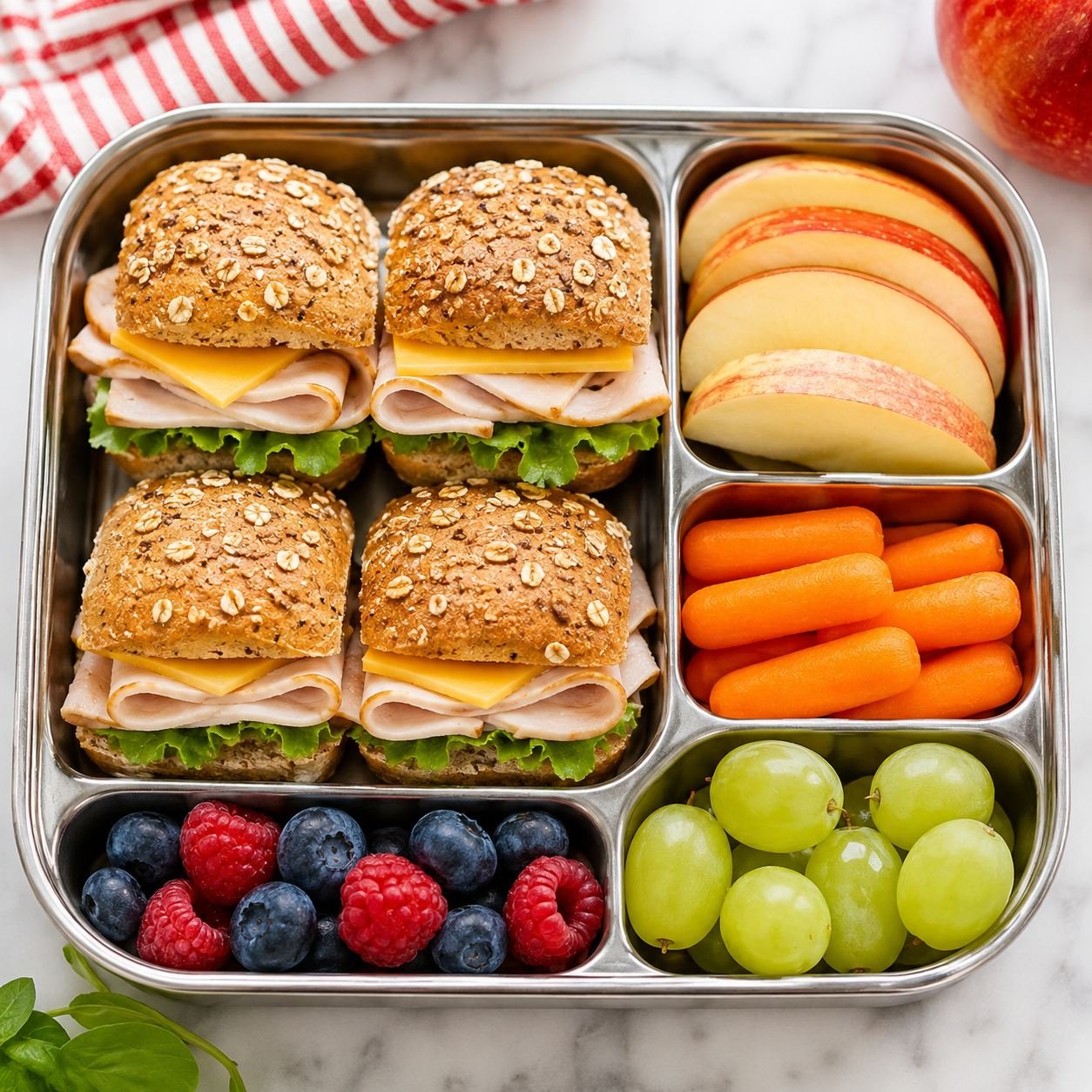
2. Turkey & Cheese Mini Sandwich Box
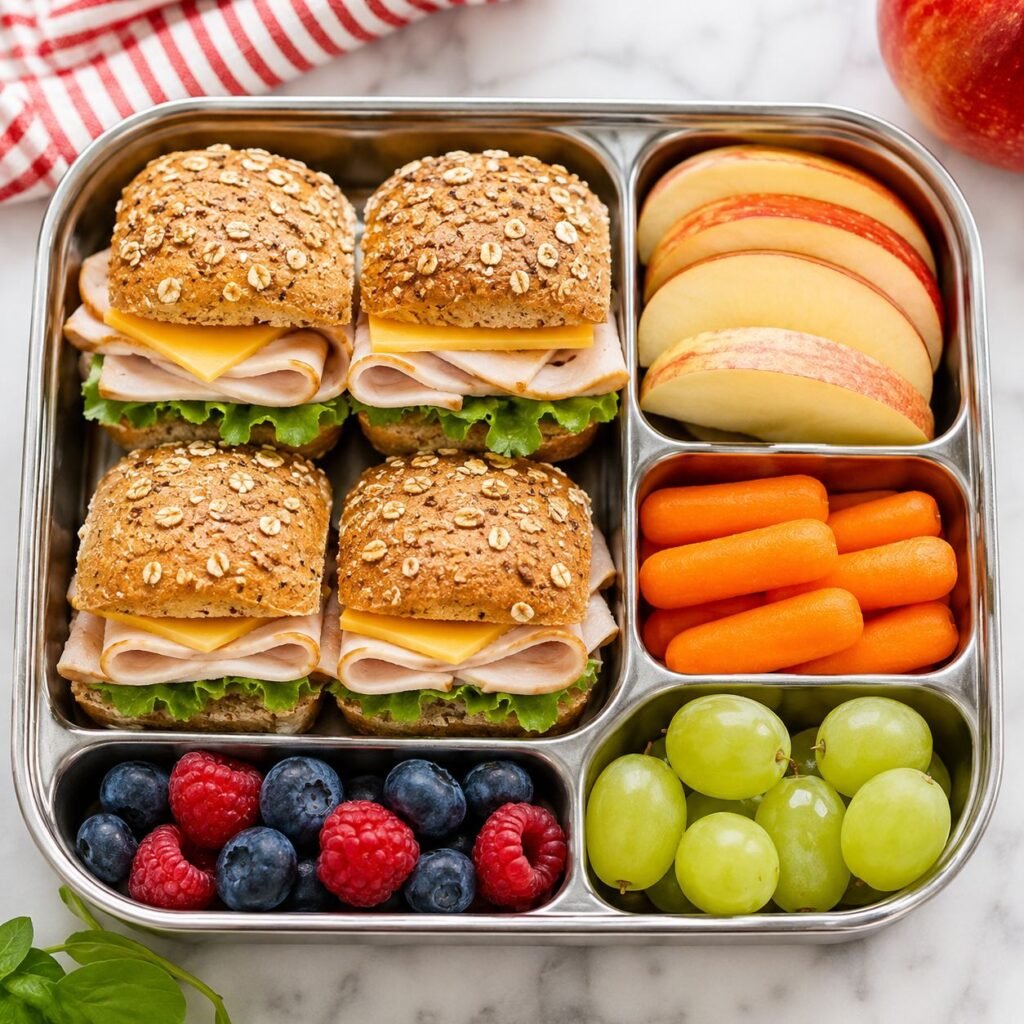
Mini sandwiches are perfect when you want something familiar but more interesting than a standard large sandwich.
Use small whole-grain rolls with turkey and cheese. Add sliced apples and baby carrots, keeping apple slices separate from sandwich.
Pack it with:
Turkey + cheese sliders + apples + baby carrots
Easy variation: Swap turkey for chicken, ham, or a thin layer of egg salad.
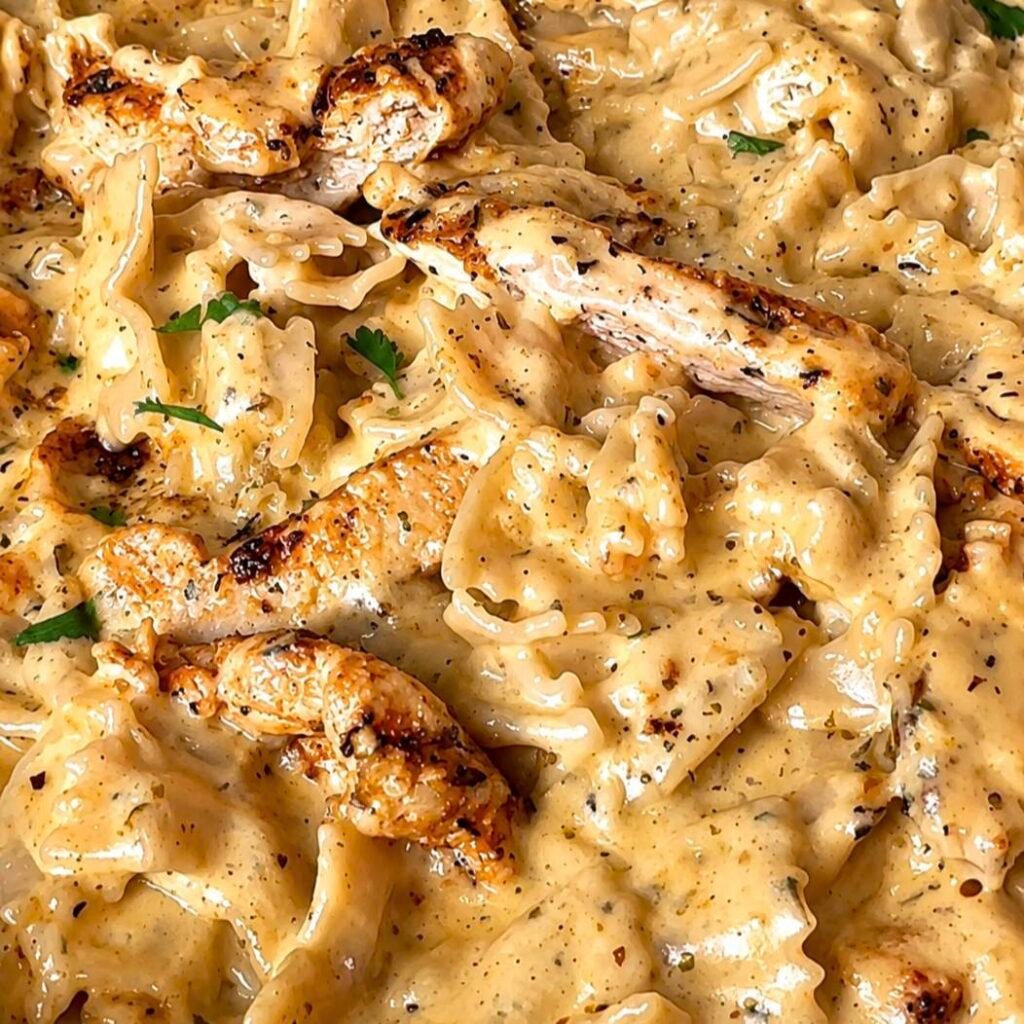
3. Chicken Pasta Salad
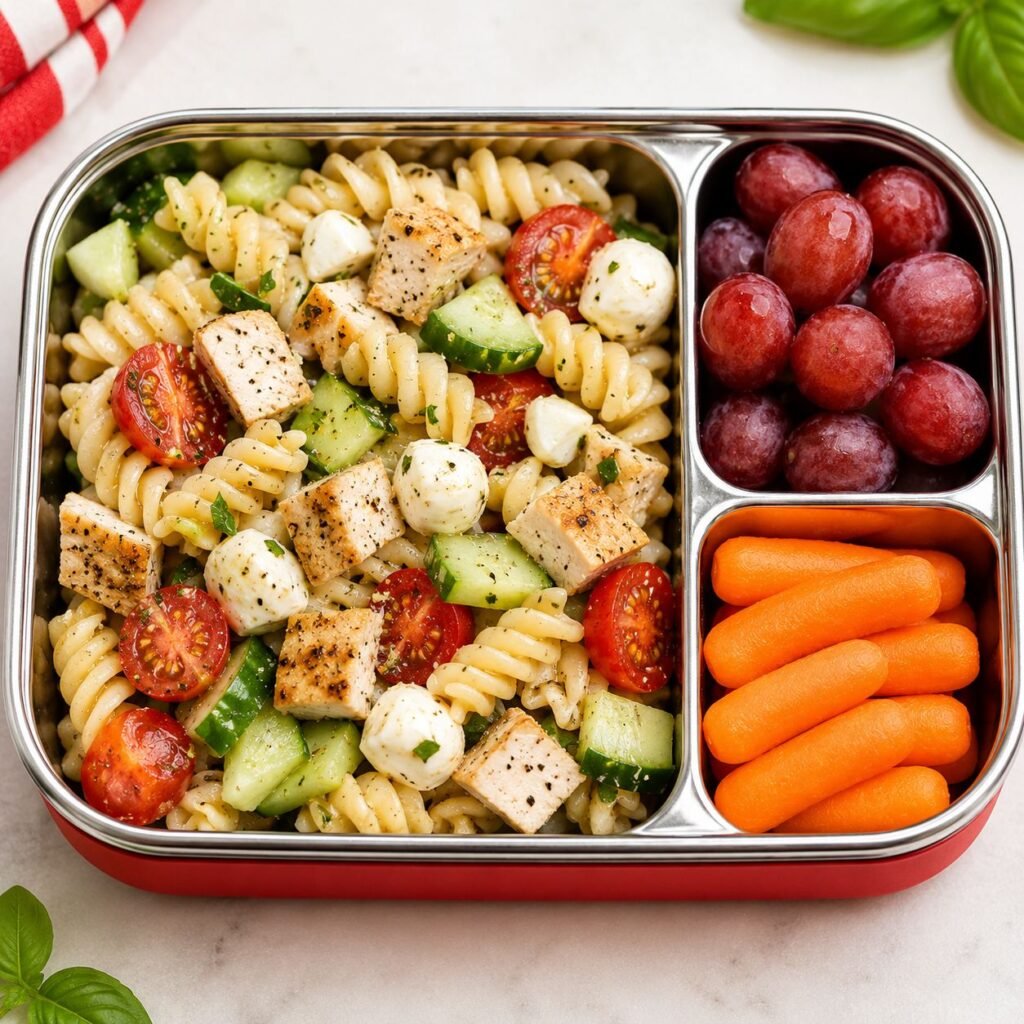
Cold pasta salad is filling, colorful, and easy to portion into a lunch container.
Combine cooked rotini with diced chicken, cucumber, cherry tomatoes, and mozzarella. Toss everything with a light Italian-style dressing.
Pack it with:
Chicken pasta salad + berries + cucumber slices
Backpack advantage: Pasta holds its shape well and doesn’t have the same structural problems as a delicate sandwich.
For safety, cooked chicken and pasta salad should be thoroughly chilled before packing and kept cold with appropriate cold sources.
4. Mini Chicken Quesadilla Box
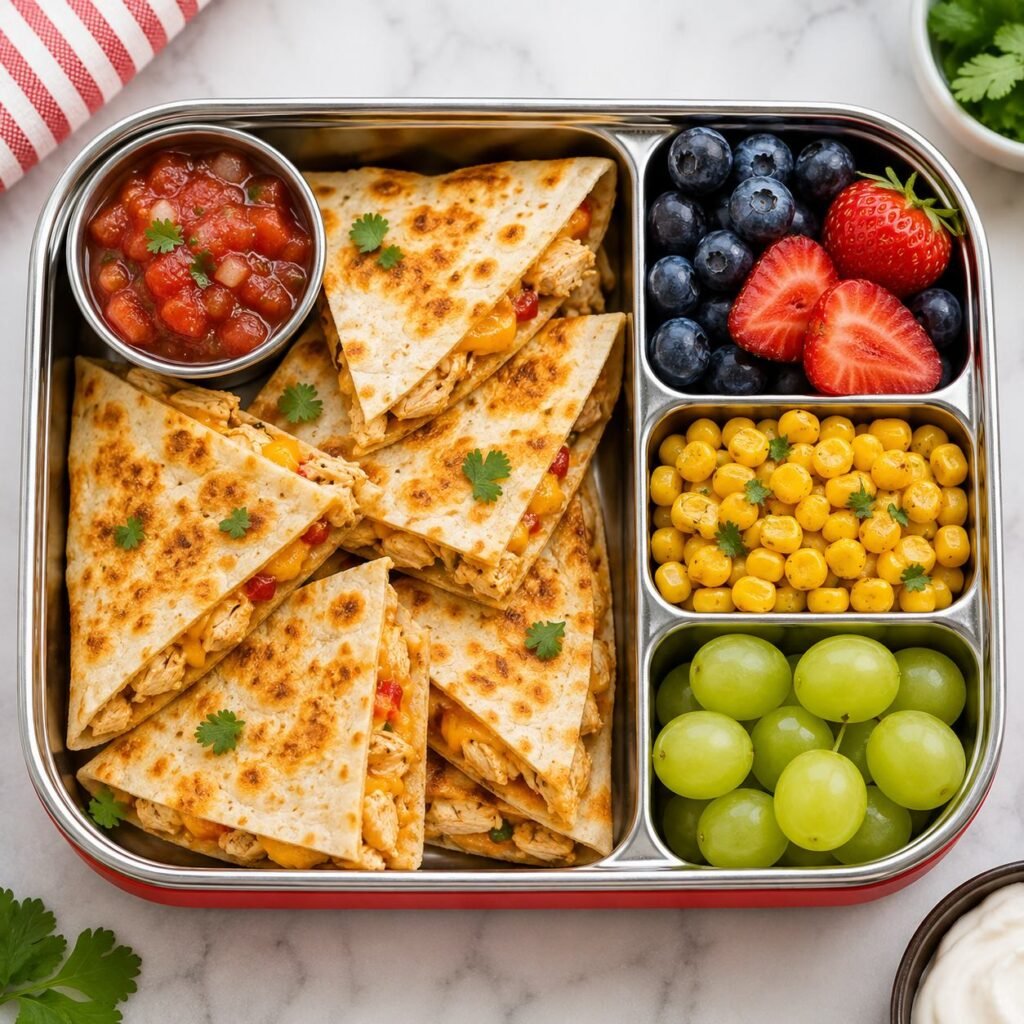
Quesadillas are a great way to turn leftover chicken into something kids are excited to eat.
Fill a tortilla with shredded chicken and cheese, cook until golden, then cut it into small triangles. Pack mild salsa separately for dipping.
Pack it with:
Chicken quesadillas + salsa + corn + berries
Tip: Let the quesadilla cool before placing it in the lunch container. This helps prevent trapped steam from making the tortilla soft.
5. Turkey Hummus Wrap
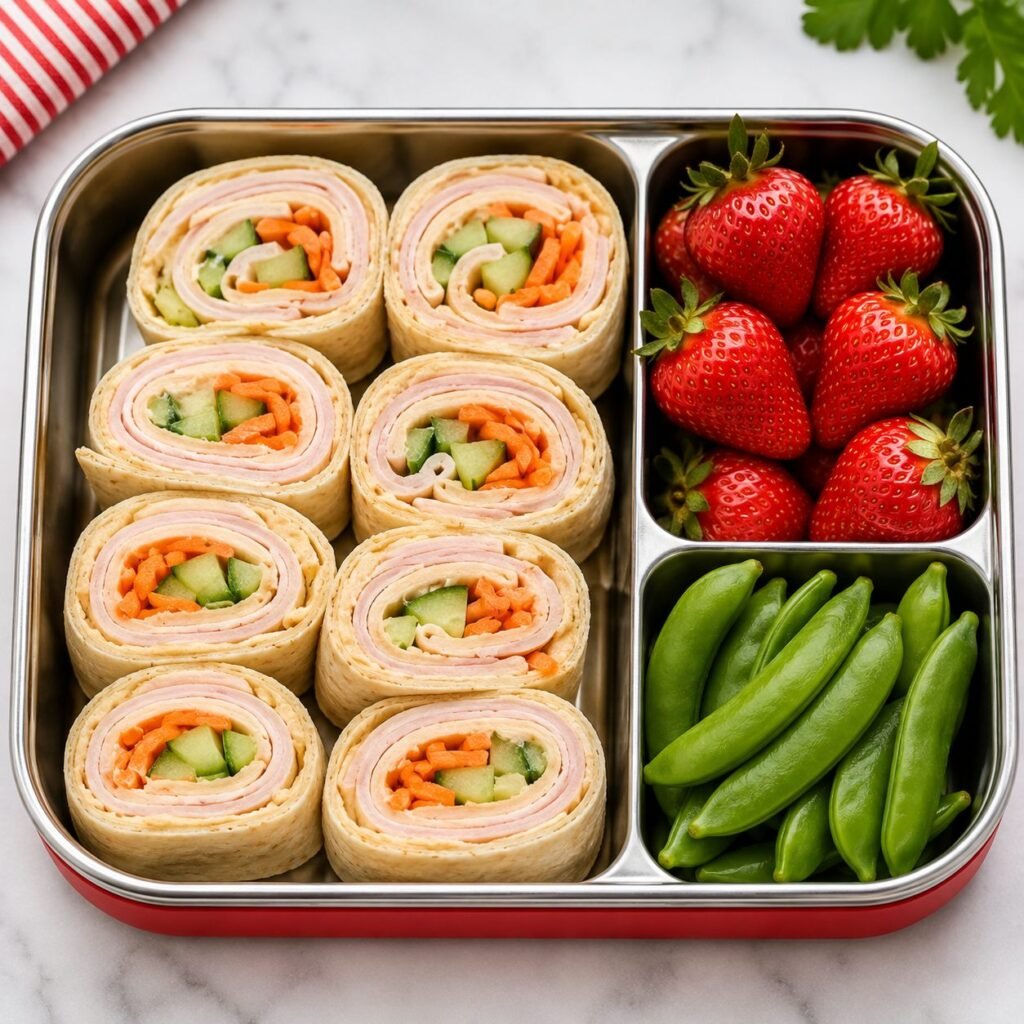
For a fresh, protein-rich lunch, spread hummus over a tortilla and layer with turkey, shredded carrots, and cucumber.
Roll it tightly and slice into pinwheels.
Pack it with:
Turkey hummus wrap + strawberries + snap peas
Hummus helps hold filling together while adding plant-based protein. Beans, peas, lentils, nuts, seeds, and soy are all recognized protein-food options as well.
6. Egg & Cheese Breakfast-for-Lunch Box
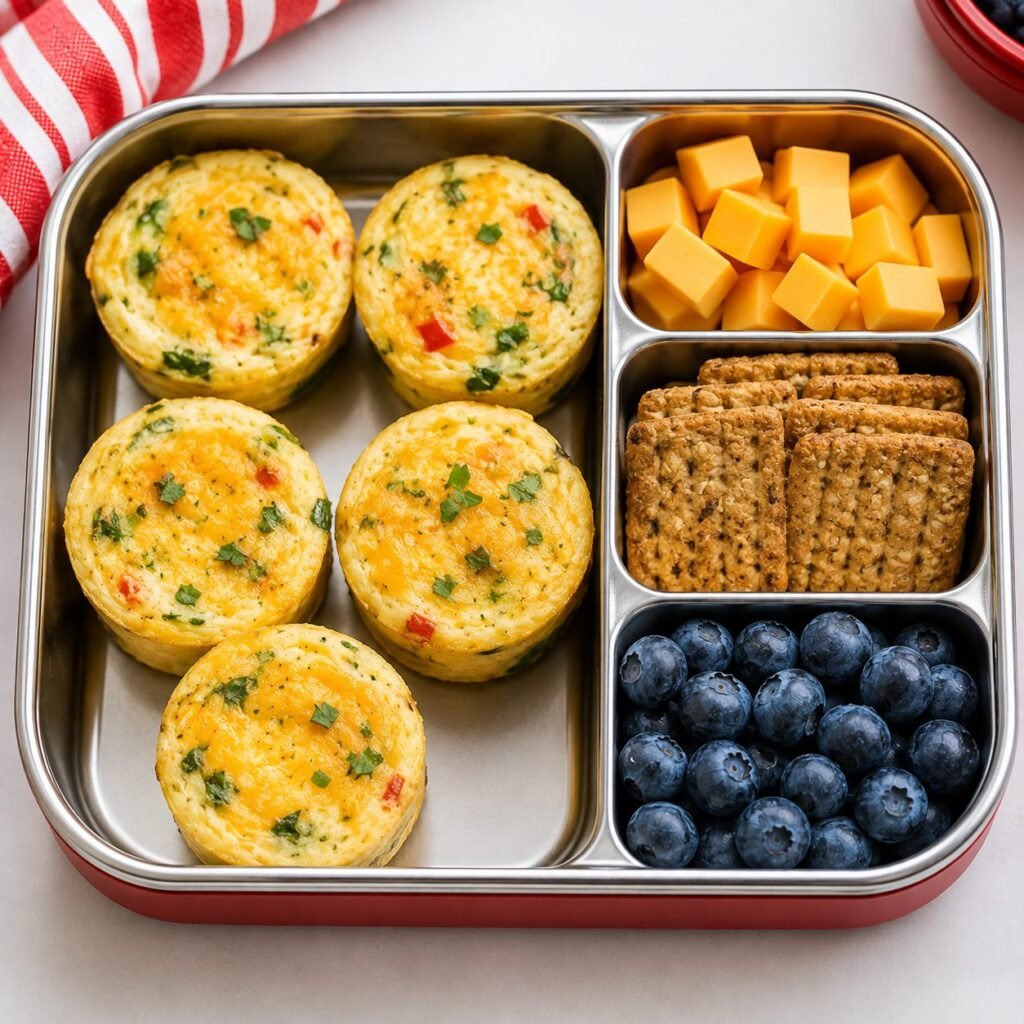
Breakfast foods can make a fun change from sandwiches.
Pack a hard-boiled egg or mini egg muffins with cheese cubes, whole-grain crackers, and fresh fruit.
Pack it with:
Egg bites + cheese + crackers + blueberries
Make-ahead tip: Bake a batch of mini egg muffins on weekend and refrigerate them for quick weekday lunches.
Because eggs are perishable, keep them refrigerated and pack them with cold sources.
7. Chicken Snack Box
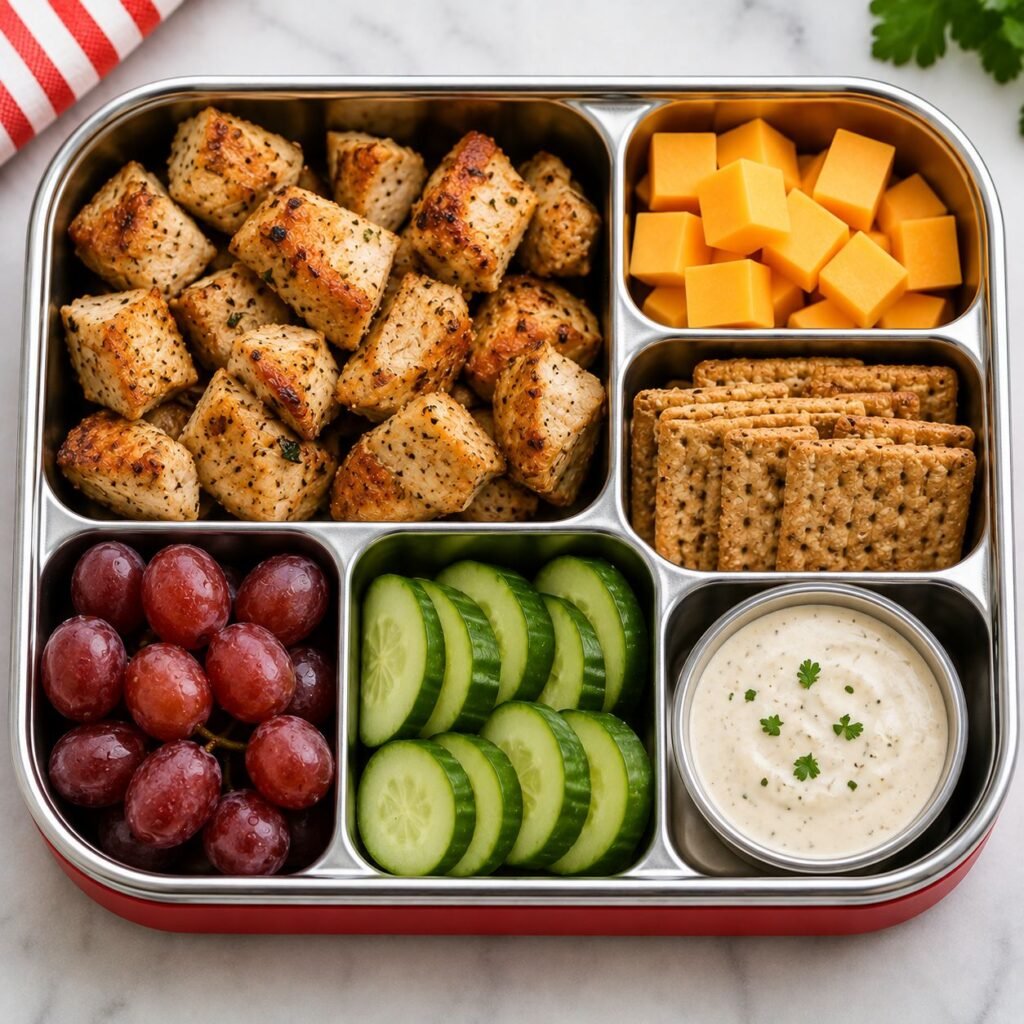
If your child likes grazing instead of eating one large meal, build a lunch around several small portions.
Add cooked chicken bites, cheese cubes, whole-grain crackers, grapes, cucumber, and a small container of ranch or hummus.
Pack it with:
Chicken bites + cheese + crackers + grapes + cucumber + dip
Format is especially useful for picky eaters because children can choose which foods to eat first.
8. Tuna & Cracker Lunch Box
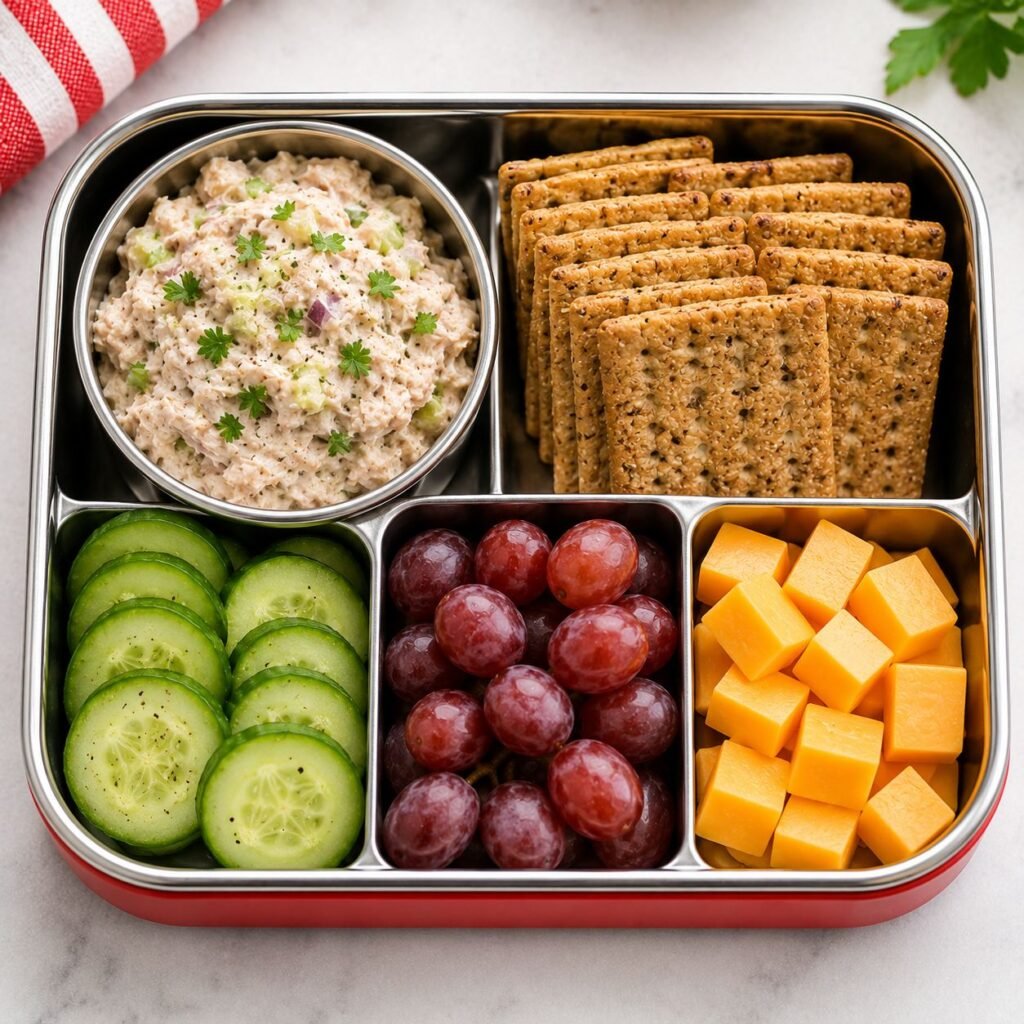
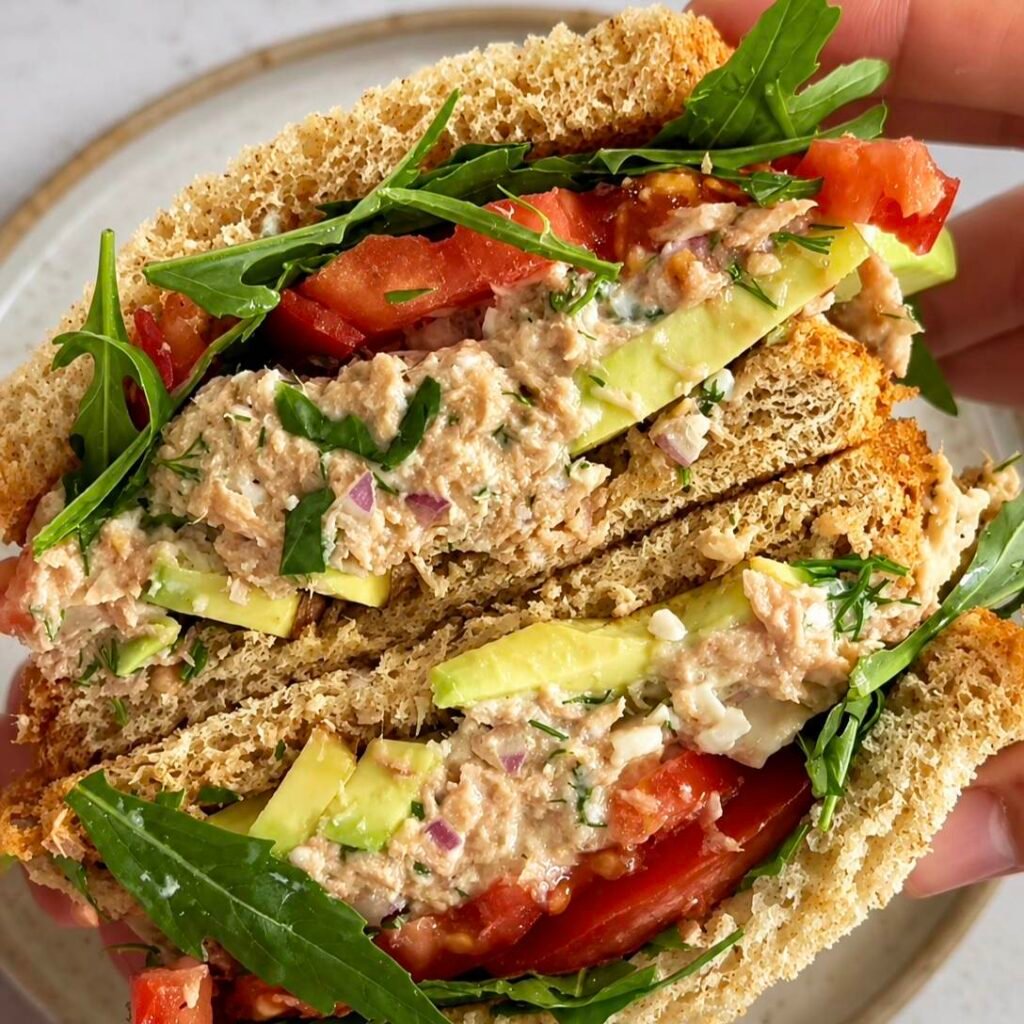
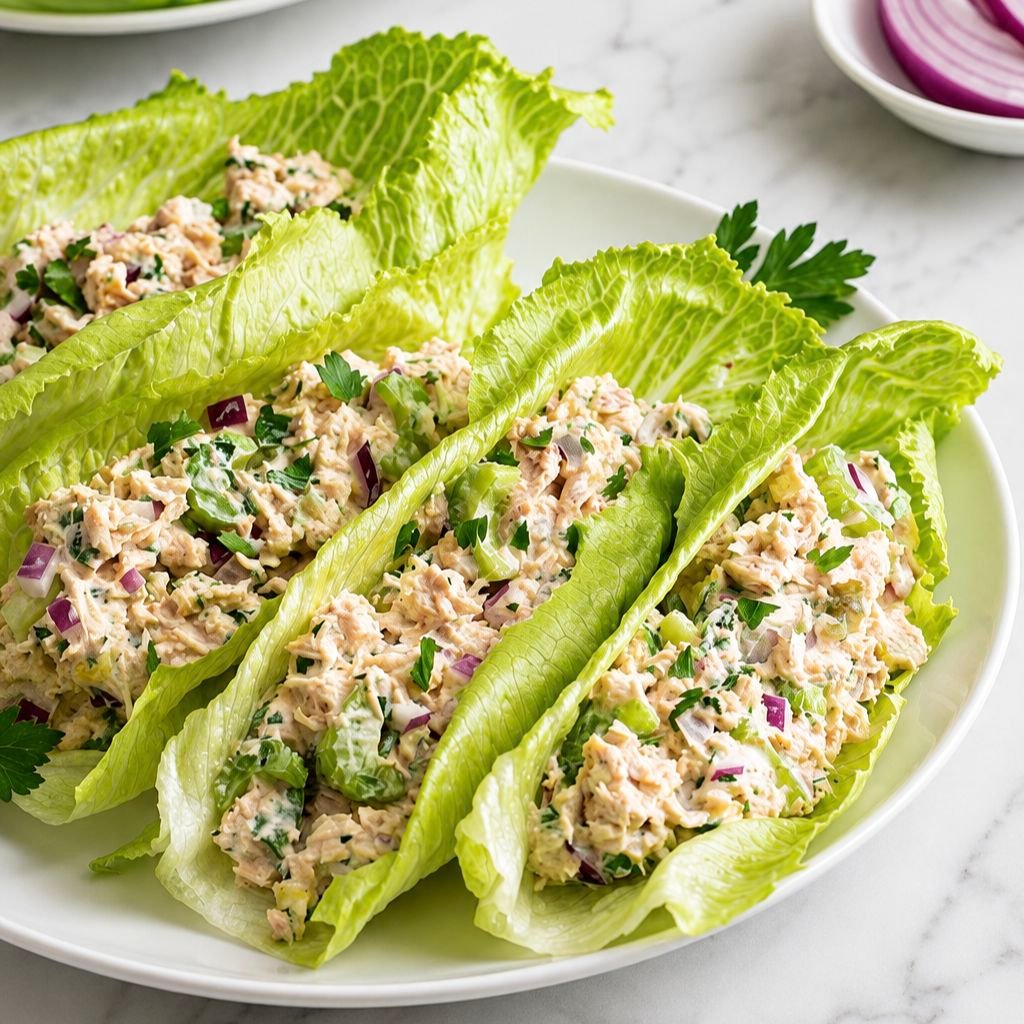
Tuna salad can become a fun, easy-to-eat lunch when served as a dip or spread rather than inside a sandwich.
Mix tuna with Greek yogurt or mayonnaise, then pack it alongside sturdy whole-grain crackers, cucumber slices, grapes, and cheese.
Pack it with:
Tuna salad + crackers + cheese + cucumber + grapes
Tip: Keep tuna salad in a sealed container and use an insulated lunch bag with cold sources.
9. Greek Chicken Pita Box
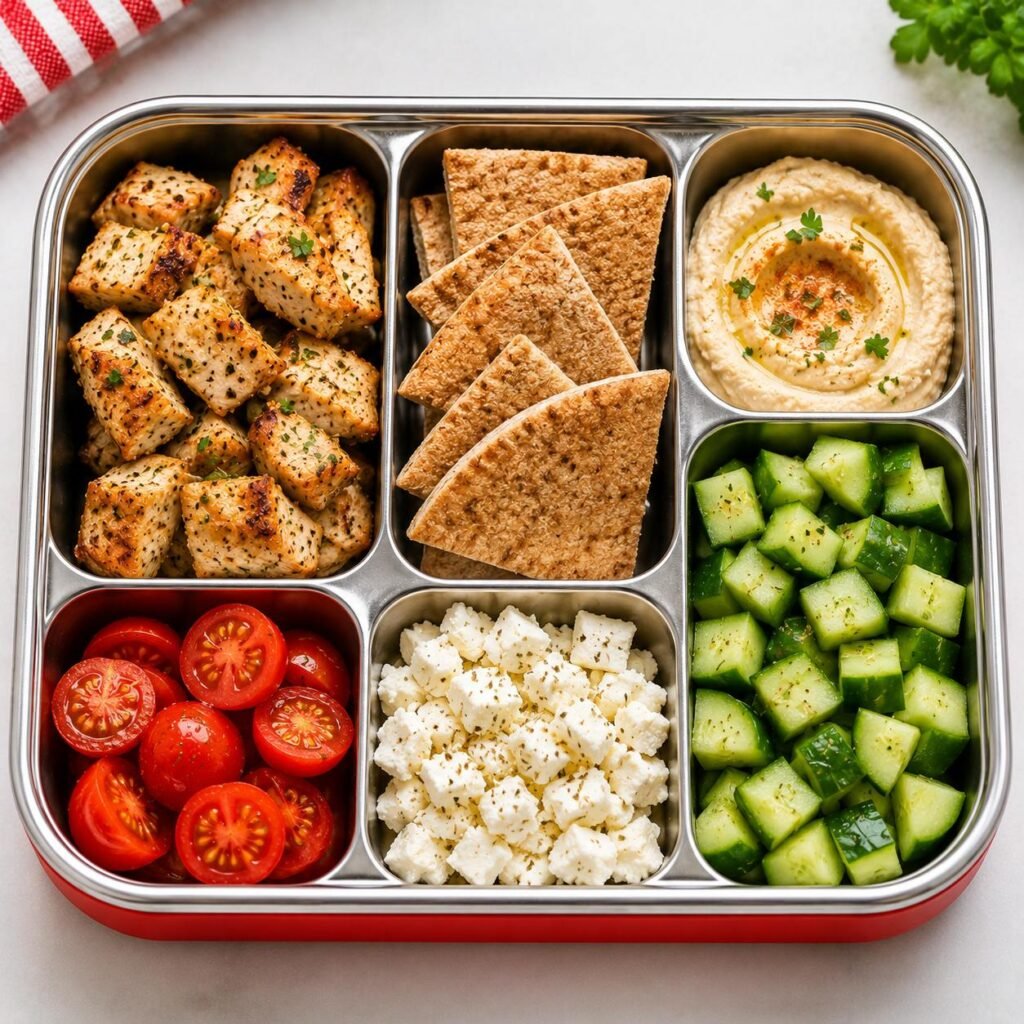
Cut a whole-wheat pita into wedges and pack it with seasoned chicken, hummus, cucumber, cherry tomatoes, and feta.
Keep the ingredients separate so kids can assemble their own little pita bites.
Pack it with:
Chicken + pita + hummus + cucumber + tomatoes + feta
This is also an easy lunch for older kids who prefer larger portions and more substantial foods.
10. Peanut Butter Banana Roll-Ups
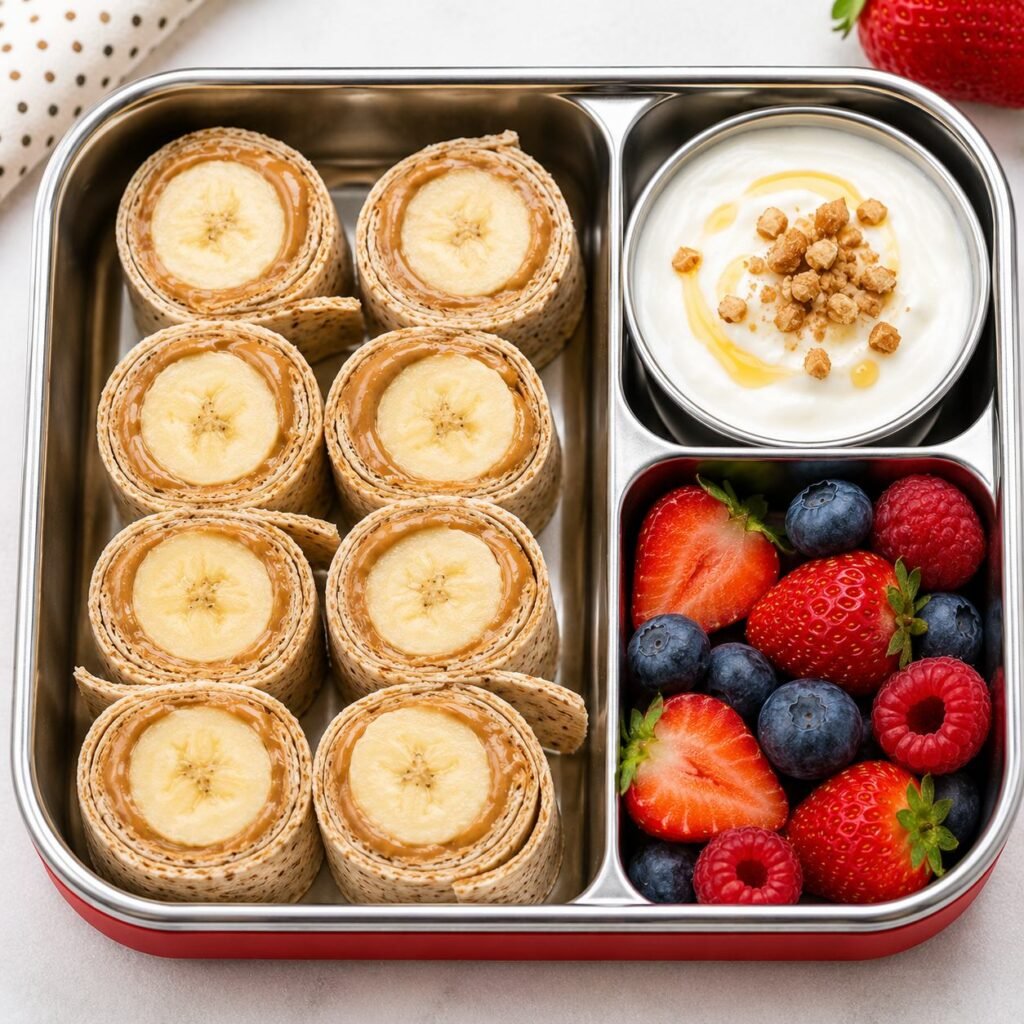
For a lunch that doesn’t depend on meat, spread peanut butter over a whole-wheat tortilla and add banana slices.
Roll it tightly and slice into rounds. Pair it with Greek yogurt and berries for an additional protein boost.
Pack it with:
Peanut butter banana roll-ups + Greek yogurt + berries
Nut-free option: Use sunflower seed butter if your child’s school has a nut-free policy.
How to Make High-Protein Lunches Survive a Backpack
A good lunch doesn’t just depend on the recipe. How you pack it matters just as much.
Choose Sturdy Foods
Tortilla roll-ups, pasta salads, quesadillas, sliders, cheese cubes, crackers, and whole fruits generally travel better than delicate foods.
Avoid packing foods that depend on a crisp texture unless you can keep wet ingredients separate.
Use a Divided Lunch Container
Bento-style containers help prevent foods from shifting around during the school commute.
Keep dips, juicy fruit, and wet ingredients in sealed compartments or small containers.
Keep Bread From Getting Soggy
If you’re packing sandwiches or wraps with juicy vegetables, pat vegetables dry before adding them.
You can also place lettuce between the bread and wetter fillings to create a small barrier.
Pack Food Tightly
Empty space allows food to move around. Fill the compartments appropriately so your lunch doesn’t arrive looking like it went through a blender.
Chill Perishable Foods Properly
This is one of the most important parts of packing a school lunch.
USDA guidance recommends using an insulated lunch bag and at least two cold sources for perishable foods. Frozen gel packs, frozen water bottles, or frozen juice boxes can help keep foods cold.
Perishable foods should stay cold until lunchtime. The USDA identifies the food-safety danger zone as 40°F to 140°F, where harmful bacteria can multiply rapidly.
Pack the Night Before
If you prepare lunch the night before, refrigerate it overnight rather than leaving the assembled lunch bag at room temperature. USDA guidance specifically recommends keeping prepared lunches refrigerated until it’s time to leave.
Easy High-Protein Lunch Formula
You don’t need a complicated recipe every day. Use this simple formula:
Protein + filling carbohydrate + fruit + vegetable + small fun food
For example:
Chicken + tortilla + strawberries + cucumber + crackers
Or:
Turkey + whole-grain bread + grapes + carrots + cheese
This gives you an easy framework for creating dozens of different combinations without starting from scratch every morning.
Best Protein Foods for Kids’ Lunch Boxes
Keep a few reliable protein options in the refrigerator or pantry:
- Cooked chicken
- Turkey
- Ham
- Tuna
- Eggs
- Cheese
- Greek yogurt
- Hummus
- Beans
- Lentils
- Peanut or sunflower seed butter
- Nuts and seeds, when school policies allow
- Tofu or other soy foods
The USDA’s MyPlate guidance includes seafood, meat, poultry, eggs, beans, peas, lentils, nuts, seeds, and soy products among protein foods.
Back-to-School Lunch Prep Tips
Choose two or three proteins at the beginning of the week and use them in different ways.
For example, cooked chicken can become chicken roll-ups on Monday, pasta salad on Tuesday, quesadillas on Wednesday, and a snack box on Thursday.
Wash fruit and vegetables ahead of time, portion crackers and snacks, and keep everything refrigerated until you’re ready to pack.
This simple system can turn weekday lunch preparation into a quick assembly job instead of a daily cooking project.
Frequently Asked Questions
What makes a good high-protein school lunch?
A good lunch combines a protein-rich food with filling carbohydrates, fruit, vegetables, and a food your child enjoys. The best option is one that’s nutritious while still being realistic for your child’s preferences.
How can I keep chicken cold in a backpack?
Use an insulated lunch bag with appropriate cold sources. USDA guidance recommends at least two cold sources for lunches containing perishable foods.
Can I prepare school lunches the night before?
Yes. Prepare the lunch, refrigerate it overnight, and place it into the insulated lunch bag with cold sources just before leaving for school.
What are good protein options for picky eaters?
Start with familiar choices such as cheese, turkey, chicken, eggs, yogurt, peanut butter, or hummus. Pair a new food with something your child already enjoys.
How do I keep wraps from getting soggy?
Don’t overload them with wet ingredients. Pat vegetables dry and keep sauces or dips separate when possible.
Are pasta salads good for school lunch?
Yes, especially when packed cold and kept properly chilled. Chicken, cheese, beans, and vegetables can make pasta salad more filling.
Can I make these lunches for older kids?
Absolutely. Increase the portions and add more substantial foods such as extra chicken, turkey, eggs, beans, whole-grain wraps, or yogurt.
What if my child’s school is nut-free?
Replace peanut butter and nuts with sunflower seed butter, hummus, cheese, eggs, chicken, turkey, or other school-approved protein options.