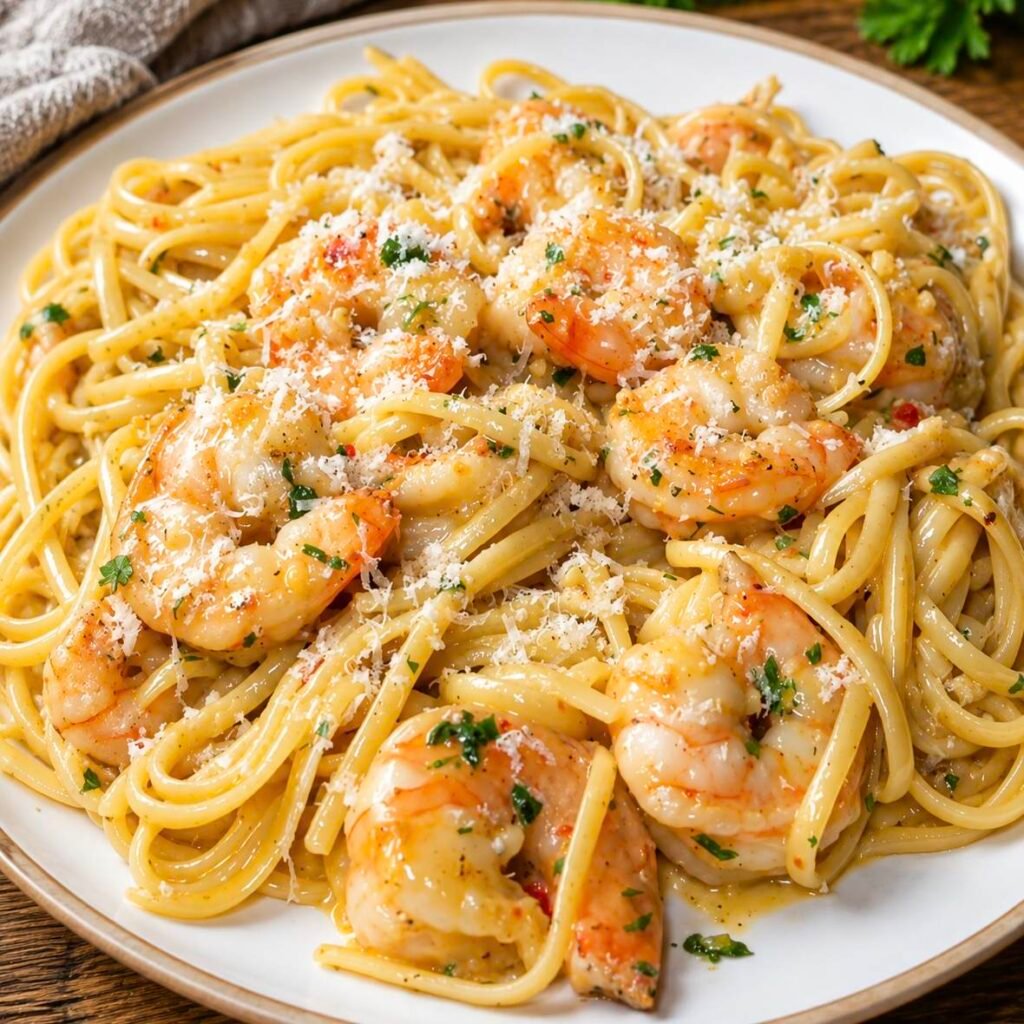
Busy weekdays call for meals that are fresh, filling, and easy to prepare ahead. These Greek Shrimp Bowls with Lemon Garlic Yogurt check every box, combining juicy seasoned shrimp, fluffy rice, crisp vegetables, salty feta, and a creamy homemade yogurt sauce.
Shrimp cook in just a few minutes, while lemon garlic yogurt comes together in one bowl. Everything can be portioned into meal-prep containers, making these Greek shrimp bowls an excellent option for easy lunches or quick dinners throughout the week.
Why You’ll Love These Greek Shrimp Bowls
- Ready in about 25 minutes.
- Packed with protein from shrimp and Greek yogurt.
- Fresh Mediterranean-inspired flavors.
- Perfect for meal prep.
- Easy to customize with different grains and vegetables.
- Lemon garlic yogurt adds creamy, tangy flavor.
- Great served warm or cold.
- Uses simple ingredients that are easy to find.
Ingredients
For Greek Shrimp
- 1½ pounds large shrimp, peeled and deveined
- 1 tablespoon olive oil
- 3 cloves garlic, minced
- 1 teaspoon dried oregano
- 1 teaspoon smoked paprika
- ½ teaspoon ground cumin
- ½ teaspoon kosher salt
- ¼ teaspoon black pepper
- 1 tablespoon fresh lemon juice
- 1 teaspoon lemon zest
For Lemon Garlic Yogurt
- 1 cup plain Greek yogurt
- 1 garlic clove, finely grated
- 1 tablespoon fresh lemon juice
- 1 teaspoon lemon zest
- 1 tablespoon extra-virgin olive oil
- 1 tablespoon chopped fresh dill or parsley
- ¼ teaspoon kosher salt
- 2–3 tablespoons water
For Bowls
- 3 cups cooked white or brown rice
- 1 cup diced cucumber
- 1 cup halved cherry tomatoes
- ½ cup thinly sliced red onion
- ½ cup crumbled feta cheese
- ½ cup pitted Kalamata olives
- ¼ cup chopped fresh parsley
- Lemon wedges, for serving
Ingredient Substitutions
- Shrimp: Substitute grilled chicken, salmon, or chickpeas.
- Rice: Use quinoa, couscous, farro, cauliflower rice, or another favorite grain.
- Greek Yogurt: Plain yogurt can be used, although Greek yogurt provides a thicker sauce.
- Feta: Goat cheese works well if you prefer a milder, creamy cheese.
- Vegetables: Add bell peppers, roasted zucchini, spinach, avocado, or artichoke hearts.
- Herbs: Fresh dill, parsley, or mint can be used depending on your preference.
Kitchen Tools Needed
- Large skillet
- Small mixing bowl
- Large mixing bowl
- Cutting board
- Chef’s knife
- Measuring cups and spoons
- Spatula
- Whisk or spoon
- Instant-read thermometer
How to Make Greek Shrimp Bowls
1. Make Lemon Garlic Yogurt
Add Greek yogurt, grated garlic, lemon juice, lemon zest, olive oil, herbs, and salt to a small bowl.
Stir until smooth. Add water 1 tablespoon at a time until the sauce is thin enough to drizzle.
Taste and adjust the salt or lemon juice as needed. Refrigerate while preparing the shrimp.
2. Season the Shrimp
Pat shrimp dry with paper towels. Removing excess moisture helps them develop better color in the skillet.
Place shrimp in a bowl and add olive oil, garlic, oregano, smoked paprika, cumin, salt, pepper, lemon juice, and lemon zest.
Toss until every shrimp is evenly coated.
3. Cook Shrimp
Heat a large skillet over medium-high heat.
Arrange shrimp in a single layer. Cook for about 2–3 minutes per side, depending on their size.
Shrimp should turn pink and opaque and reach 145°F internally. Remove them from heat immediately to prevent overcooking.
4. Prepare Bowl Ingredients
While shrimp cook, prepare the cucumber, tomatoes, red onion, parsley, and lemon wedges.
Have cooked rice ready for assembling the bowls.
5. Assemble Bowls
Divide rice between four bowls or meal-prep containers.
Add the cooked shrimp, cucumber, tomatoes, red onion, feta, and Kalamata olives.
Drizzle with lemon garlic yogurt and sprinkle with fresh parsley.
Serve with lemon wedges for an extra burst of fresh flavor.
Pro Tips
Dry the shrimp first. Wet shrimp tend to steam instead of developing a lightly browned exterior.
Don’t overcrowd the pan. Cook the shrimp in batches if necessary.
Watch the cooking time. Shrimp cook quickly and can become rubbery when left over high heat.
Use fresh lemon. Fresh juice and zest give the yogurt sauce a much brighter flavor than bottled lemon juice.
Keep the sauce separate for meal prep. This prevents the vegetables and rice from becoming soggy.
Use an instant-read thermometer. Shrimp should reach 145°F for safe cooking.
Variations
Low-Carb Greek Shrimp Bowls
Replace rice with cauliflower rice, chopped romaine, or a combination of greens and roasted vegetables.
Greek Shrimp Quinoa Bowls
Swap rice for cooked quinoa for a nutty flavor and satisfying texture.
Spicy Shrimp Bowls
Add ¼–½ teaspoon crushed red pepper flakes to the shrimp seasoning.
Mediterranean Chicken Bowls
Replace shrimp with sliced chicken breast. Cook until the chicken reaches 165°F.
Extra Veggie Greek Bowls
Add roasted zucchini, bell peppers, spinach, or artichoke hearts.
Creamy Feta Yogurt Sauce
Mix 2 tablespoons crumbled feta into the lemon garlic yogurt for an extra tangy sauce.
What to Serve With It
These bowls are filling on their own, but you can serve them with:
- Warm pita bread
- Hummus
- Greek salad
- Roasted potatoes
- Grilled vegetables
- Tzatziki
- Fresh fruit
- Lemon wedges
A simple cucumber and tomato salad is especially good alongside these bowls when you want an even fresher meal.
Storage Instructions
Refrigerator
Store the shrimp, rice, and vegetables in airtight containers in the refrigerator for up to 3 days.
Keep the lemon garlic yogurt in a separate container until you’re ready to eat.
Freezer
Cooked shrimp and rice can be frozen separately for up to 2 months.
Fresh vegetables and the yogurt sauce should not be frozen because their texture can change significantly after thawing.
Reheating
Reheat the shrimp and rice gently in the microwave or a skillet until heated through.
Add the cucumber, tomatoes, feta, and yogurt sauce after reheating.
Make-Ahead Tips
Cook the rice and shrimp in advance and portion them into meal-prep containers.
Prepare the lemon garlic yogurt up to 3 days ahead and store it separately.
Wash and chop the vegetables in advance so the bowls can be assembled quickly.
For the best texture, add the fresh vegetables and sauce just before serving.
Frequently Asked Questions
Can I use frozen shrimp?
Yes. Thaw frozen shrimp completely in the refrigerator or under cold running water, then pat them very dry before cooking.
What size shrimp should I use?
Large shrimp are a great choice because they cook quickly while remaining meaty and juicy. Jumbo shrimp work well too.
Can I make these bowls without rice?
Absolutely. Use quinoa, couscous, cauliflower rice, greens, or roasted vegetables instead.
How long do Greek shrimp bowls last?
For the best quality, refrigerate them promptly and eat them within 3 days.
Can I make the yogurt sauce ahead?
Yes. The lemon garlic yogurt can be made up to 3 days in advance and kept covered in the refrigerator.
Can I use regular yogurt?
Yes, although Greek yogurt makes the sauce thicker and adds more protein.
Can I serve these bowls cold?
Yes. The shrimp and rice can be enjoyed chilled, making these bowls especially convenient for packed lunches.
How do I prevent shrimp from becoming rubbery?
Cook them just until they turn opaque and reach 145°F. Remove them from the heat immediately because they continue cooking slightly after leaving the skillet.
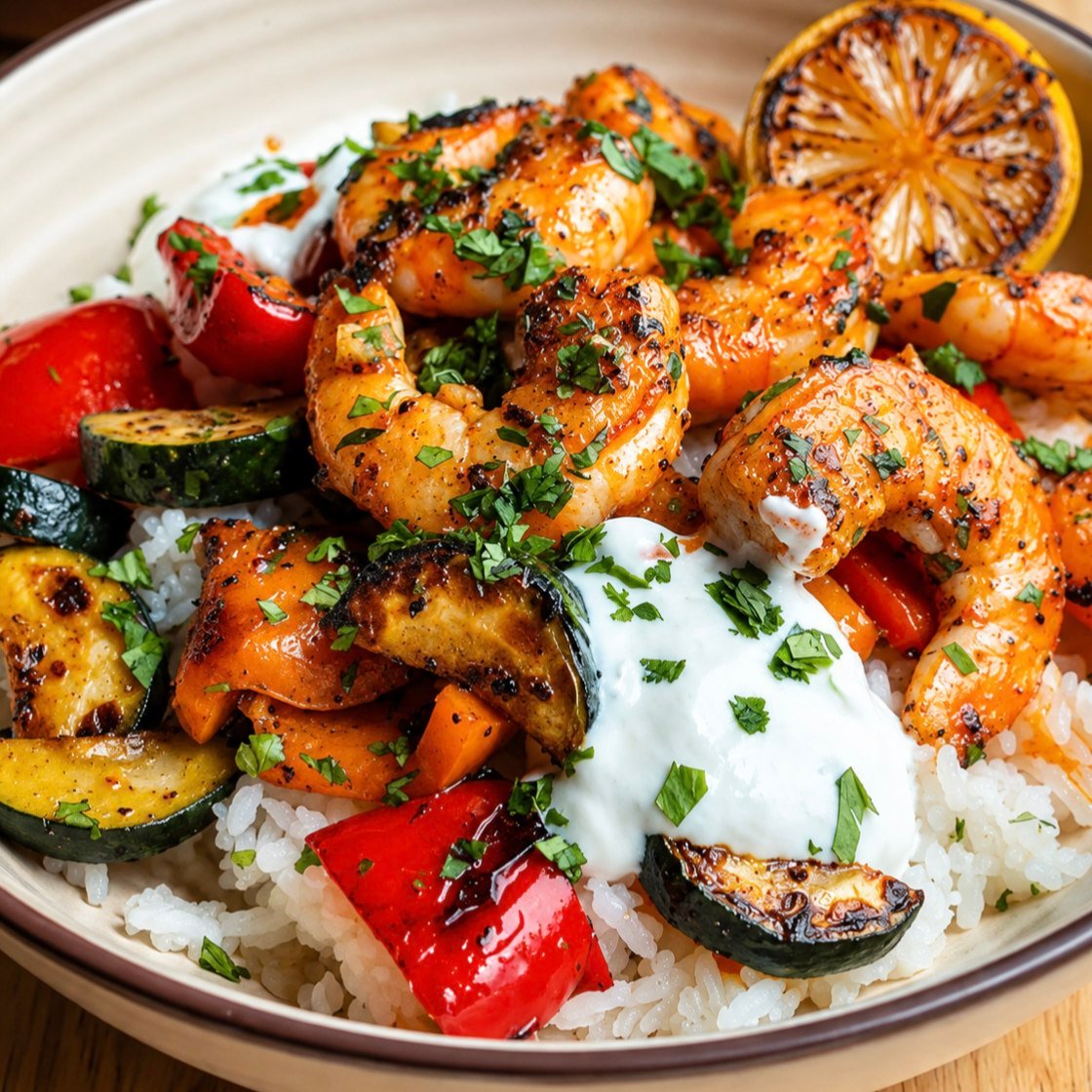
Greek Shrimp Bowls with Lemon Garlic Yogurt
Ingredients
Method
- Add Greek yogurt, grated garlic, lemon juice, lemon zest, olive oil, herbs, and salt to a small bowl. Stir until smooth.
- Add water 1 tablespoon at a time until the yogurt sauce reaches a creamy, drizzleable consistency. Refrigerate until ready to serve.
- Pat the shrimp dry with paper towels. Add shrimp to a bowl with olive oil, garlic, oregano, smoked paprika, cumin, salt, pepper, lemon juice, and lemon zest. Toss to coat.
- Heat a large skillet over medium-high heat. Add the shrimp in a single layer.
- Cook for 2–3 minutes per side, or until the shrimp are pink, opaque, and reach 145°F internally.
- Remove the shrimp from the skillet immediately to prevent overcooking.
- Divide the cooked rice between 4 bowls or meal-prep containers.
- Add the cooked shrimp, cucumber, tomatoes, red onion, feta, and Kalamata olives.
- Drizzle with the lemon garlic yogurt sauce and garnish with fresh parsley.