If you love bold, zesty flavors, homemade Fire Cider is a fun kitchen project to try. This traditional-style herbal vinegar combines pungent horseradish, fresh ginger, garlic, onion, hot peppers, citrus, herbs, and warming spices in a tangy apple cider vinegar base.
It takes a little patience while ingredients infuse, but hands-on preparation is surprisingly simple. The finished vinegar is spicy, tart, aromatic, and incredibly versatile in the kitchen.
What Is Fire Cider?
Fire cider is a vinegar-based herbal infusion traditionally made with ingredients such as horseradish, ginger, garlic, onion, hot peppers, and citrus.
Recipes vary widely, and there isn’t one fixed ingredient list. Some versions include turmeric, rosemary, thyme, cinnamon, black peppercorns, honey, or other herbs and spices.
It’s often enjoyed in small amounts as a traditional wellness tonic, but it’s important to note that fire cider hasn’t been established as a treatment or cure for illness. Think of it as a flavorful herbal preparation rather than a substitute for medical care.
Why You’ll Love This Homemade Fire Cider
- Easy to prepare at home
- Uses fresh, flavorful ingredients
- Naturally spicy and tangy
- No cooking required
- Highly customizable
- Great for salad dressings and marinades
- Makes a unique homemade gift
- Can be prepared several weeks ahead
Ingredients You’ll Need
- ½ cup fresh horseradish root, chopped
- ½ cup fresh ginger, sliced
- ½ cup fresh turmeric, sliced
- ½ medium onion, chopped
- 6 garlic cloves, roughly chopped
- 2–4 fresh hot peppers, sliced
- 1 lemon, sliced
- 1 orange, sliced
- 2 sprigs fresh rosemary or thyme
- 1 cinnamon stick
- 1 teaspoon whole black peppercorns
- Raw apple cider vinegar, enough to completely cover the ingredients
- 2–4 tablespoons raw honey, or to taste
How to Make Fire Cider
Prepare Ingredients
Wash and fresh ingredients thoroughly.
Roughly chop the horseradish, ginger, turmeric, onion, garlic, and hot peppers. Slice lemon and orange into smaller pieces so their flavors can infuse easily.
You don’t need perfectly uniform pieces. The goal is simply to expose plenty of surface area to the vinegar.
Fill the Jar
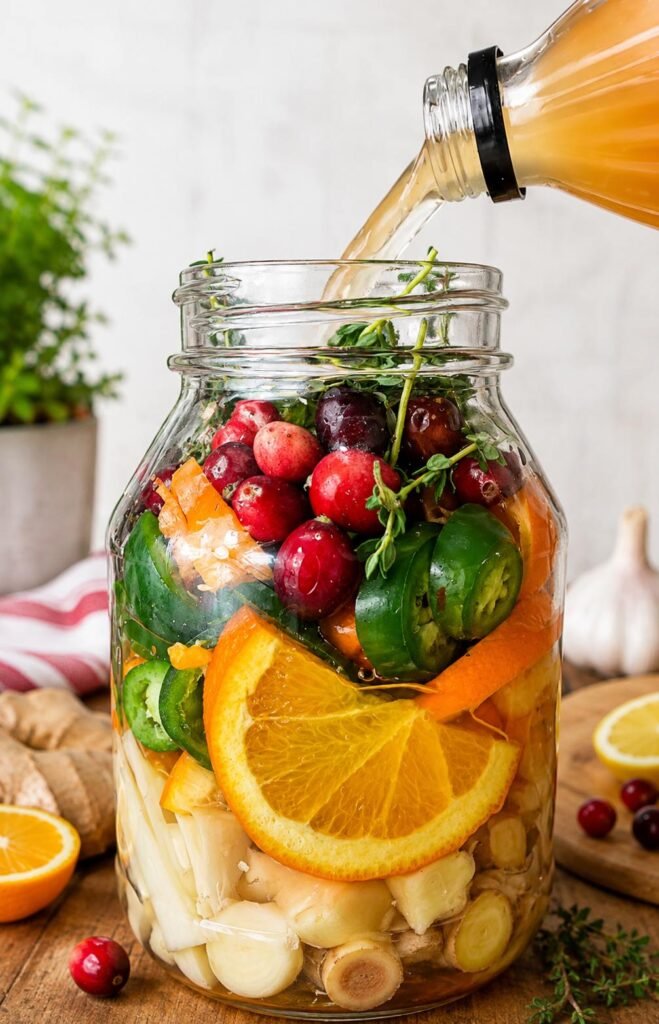
Place chopped ingredients, citrus, herbs, cinnamon stick, and peppercorns into a clean glass jar.
A quart-size jar works well for a batch of this size. Don’t pack the ingredients too tightly because you want the vinegar to circulate around them.
Add the Vinegar
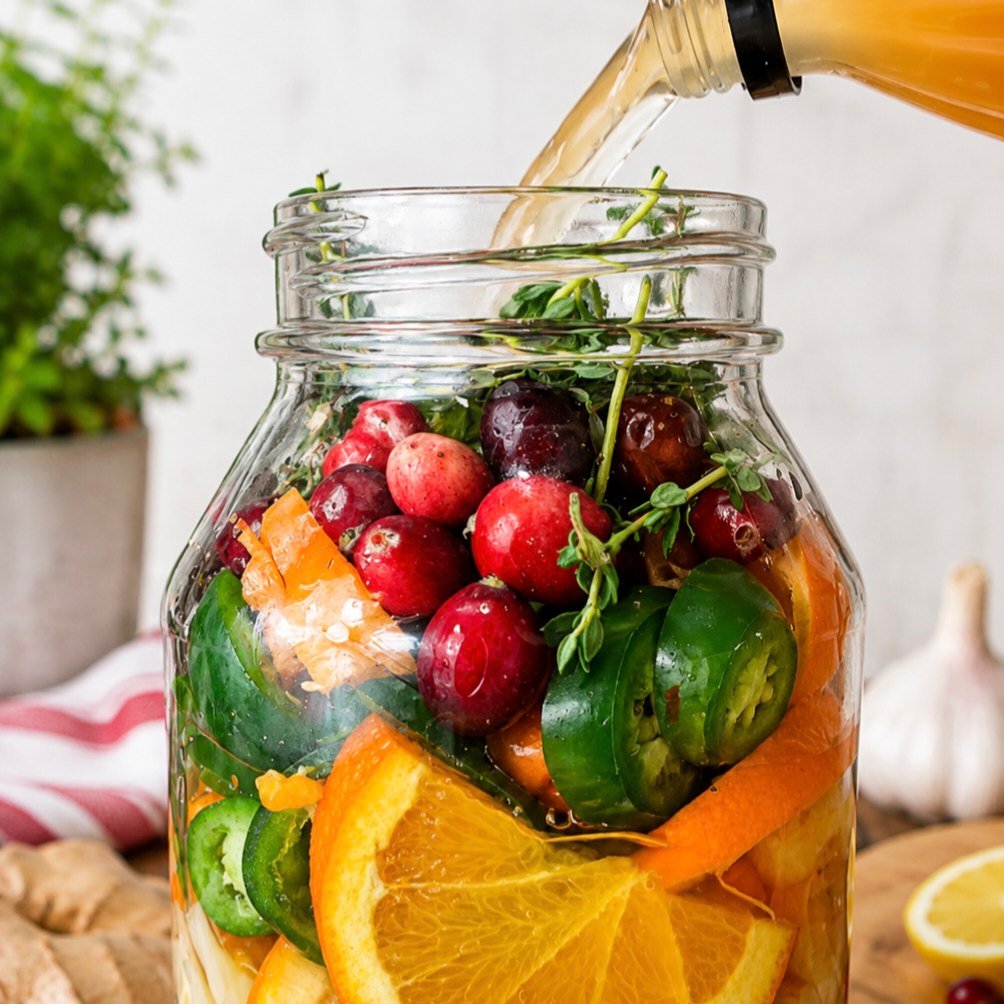
Pour raw apple cider vinegar into the jar until all of the ingredients are completely submerged.
Use a clean utensil to gently press down any ingredients that are floating above the vinegar.
Seal the Jar
If you’re using a metal lid, place a piece of parchment paper between the jar and the lid before tightening it. The vinegar is acidic and can react with some metal lids.
Label the jar with the date and ingredients, then store it in a cool, dark place.
Let It Infuse
Allow the mixture to infuse for approximately 3–4 weeks.
Give the jar a gentle shake every day or whenever you remember. Check periodically to make sure the ingredients remain covered by vinegar.
If any ingredients rise above the vinegar, press them back down.
Strain the Mixture
After the infusion period, pour the mixture through a fine-mesh strainer.
Press the solids gently to extract as much infused vinegar as practical.
Discard the strained solids.
Add Honey
While the infused vinegar is at room temperature, stir in honey to taste.
Start with a small amount and add more if you prefer a sweeter, smoother finish. The honey helps balance the sharp vinegar, spicy peppers, ginger, and horseradish.
Bottle and Refrigerate
Transfer the finished fire cider to a clean glass bottle or jar.
Seal tightly and refrigerate.
Tips for Making Fire Cider
Keep Everything Submerged
The ingredients should remain completely covered by vinegar during the infusion. This helps maintain the intended acidic environment and reduces the chance of unwanted spoilage.
Adjust the Heat
The amount and type of hot peppers make a big difference.
For a milder batch, use fewer peppers and remove the seeds. For a fiery version, use hotter peppers and leave some seeds intact.
Use Fresh Ingredients
Fresh ginger, horseradish, garlic, citrus, and herbs provide the brightest flavor.
Don’t Rush the Infusion
The vinegar needs time to draw flavor from the ingredients. A few weeks gives the finished mixture much more depth than a quick infusion.
How to Use Fire Cider
Fire cider isn’t just something to sip. Its bold flavor makes it surprisingly useful in the kitchen.
Try it as:
- A salad dressing ingredient
- A marinade for chicken or vegetables
- A splash in soups
- A component of a vinaigrette
- A flavor booster for roasted vegetables
- A base for a spicy dipping sauce
Because it’s intensely flavored, start with a small amount and adjust to taste.
Fire Cider Variations
Extra-Spicy Fire Cider
Add additional fresh chili peppers or use a hotter variety.
Citrus Fire Cider
Increase the amount of lemon and orange for a brighter, more citrus-forward flavor.
Turmeric-Ginger Fire Cider
Use extra fresh turmeric and ginger for a strongly aromatic version.
Herb-Infused Fire Cider
Add rosemary, thyme, sage, or oregano for a more herbal flavor.
Sweeter Fire Cider
Increase the honey after straining until the vinegar reaches your preferred balance of sweet, sour, and spicy.
How Long Does Fire Cider Last?
Because homemade fire cider contains fresh ingredients and is prepared in a home kitchen, storage life can vary.
After straining, transfer it to a clean, airtight container and refrigerate it. For best quality, use it within several weeks and discard it if you notice mold, unusual odors, fermentation, or other signs of spoilage.
Always use clean utensils when serving.
Important Safety Notes
Fire cider is highly acidic and spicy. It may irritate the mouth or digestive system, particularly in people who are sensitive to spicy or acidic foods.
If you have a medical condition, take medications, are pregnant, or have been advised to limit acidic or spicy foods, check with a healthcare professional before regularly consuming herbal preparations.
This recipe is intended as a food preparation and traditional-style tonic, not as a medical treatment.
Frequently Asked Questions
Does fire cider need to be refrigerated?
Yes. Once strained, refrigerating homemade fire cider is the safest choice for maintaining quality.
How long should fire cider infuse?
Three to four weeks is a good starting point for a flavorful infusion. You can taste a small amount toward the end of the infusion to decide whether you’d like to let it continue.
Can I make fire cider without hot peppers?
Absolutely. The peppers provide heat, but you can leave them out or use a very mild pepper if you prefer.
Can I use dried herbs?
Yes, but fresh herbs provide a brighter flavor. If using dried herbs, use them sparingly because their flavor is more concentrated.
Can I drink fire cider straight?
Some people enjoy small amounts of infused vinegar, but it is very strong and acidic. Diluting it with water or incorporating it into food may be more comfortable.
Fire Cider | Spicy Homemade Herbal Tonic
Ingredients
Method
- Wash and thoroughly dry the fresh produce.
- Roughly chop the horseradish, ginger, turmeric, onion, garlic, and hot peppers.
- Slice the lemon and orange into smaller pieces.
- Add the chopped ingredients, citrus, herbs, cinnamon stick, and black peppercorns to a clean quart-size glass jar.
- Pour apple cider vinegar into the jar until all ingredients are completely submerged.
- Press down any floating ingredients with a clean utensil.
- If using a metal lid, place parchment paper between the jar and lid before sealing.
- Close the jar tightly and store it in a cool, dark place for 3–4 weeks.
- Gently shake the jar regularly and check that the ingredients remain covered with vinegar.
- After the infusion period, strain the mixture through a fine-mesh strainer.
- Press the solids gently to extract the infused vinegar.
- Stir honey into the strained vinegar, adding more to taste.
- Transfer to a clean glass bottle or jar, seal, and refrigerate.
- Use in small amounts as a flavorful vinegar, salad dressing ingredient, marinade, or condiment.